

KentuckyStrongFamilies.org
Supporting Families | Sponsored by Lives on Mission Ministries Inc.
Finding Hope in Difficult Times
Hope isn’t pretending everything is fine — it’s deciding to keep going anyway.
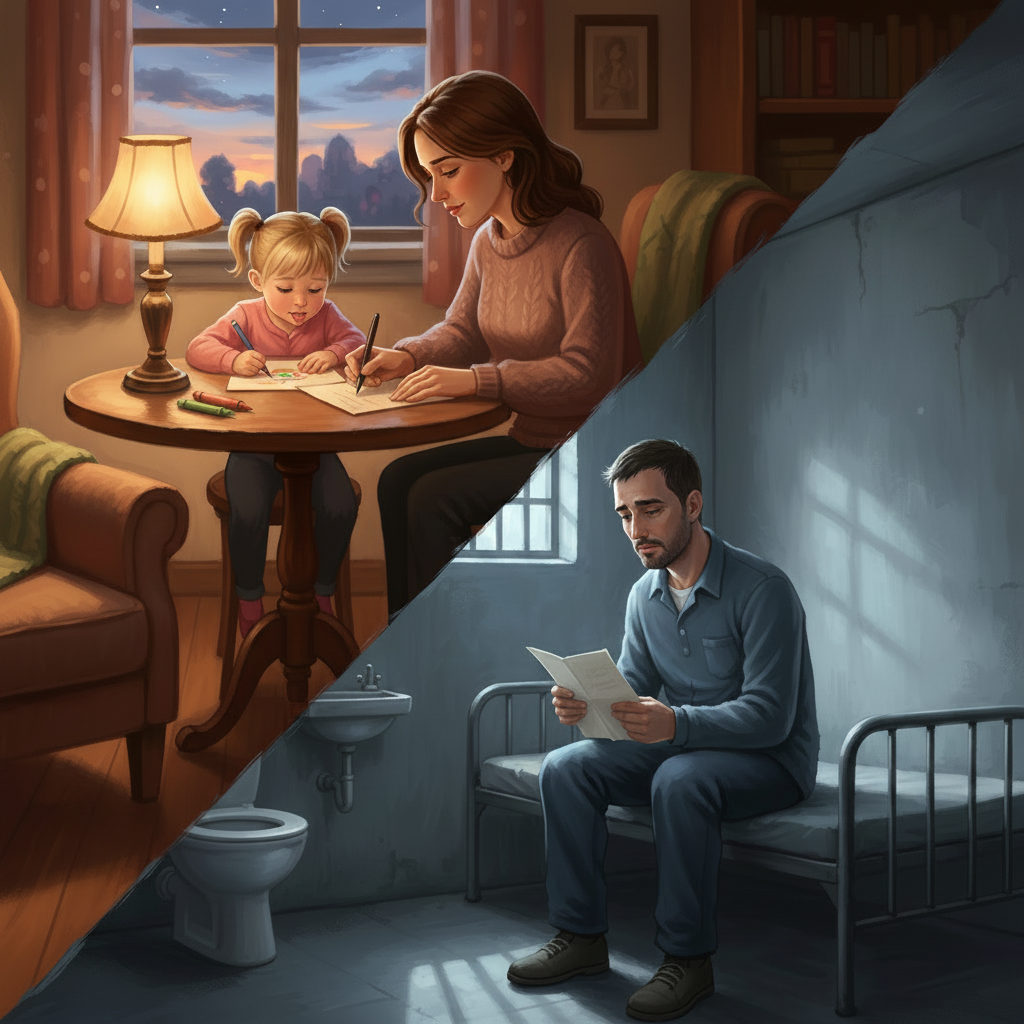
There’s a particular kind of exhaustion that sets in after the initial shock fades. The phone calls, the court dates, the explaining to people, the holding it together for everyone else — it wears on you. And somewhere in the middle of all of it, hope starts to feel like a luxury you can’t afford.
If that’s where you are right now, this post is for you. Not to tell you to cheer up. Not to hand you a list of Bible verses and send you on your way. But to sit with you for a moment and say: what you’re feeling is real, and hope — the kind that actually holds — is still possible.
Hope Is Not the Same as Optimism
Optimism says, everything will work out fine. Hope says, I don’t know how this ends, but I am not giving up.
That distinction matters. Forced optimism collapses under the weight of hard facts. If someone tells you “just stay positive” when you’re facing a multi-year sentence, a fractured family, and a depleted bank account, that advice doesn’t hold up.
But hope is different. Hope is not dependent on circumstances being good. It is a decision — sometimes a daily, grinding decision — to believe that your story and your loved one’s story are not finished yet. That who he is today is not the final word on who he can become.
That kind of hope is harder to come by than optimism, but it is far more durable.
What Gets in the Way of Hope
Before you can hold onto hope, it helps to know what knocks it loose. For most families in this situation, it’s one or more of these:
Shame. When you feel like what happened reflects on you, it’s hard to look forward with any confidence. Shame turns inward and convinces you that you — and he — deserve whatever is happening.
Repeated disappointments. Maybe he’s been in trouble before. Maybe he made promises he didn’t keep. When hope has been betrayed, it takes courage to try again.
Isolation. When you’re carrying this alone and don’t see anyone else in a similar situation, it’s easy to believe that no one gets out of this, that change doesn’t really happen.
Exhaustion. When you are worn down enough, hope feels like one more thing you don’t have the energy for.
Naming these honestly isn’t defeatist — it’s the first step toward addressing them.
Grounded Hope: What It Looks Like in Practice
Grounded hope isn’t a feeling you wait for. It’s built slowly, in small decisions.
Find one story of real change. There are men who have come out of incarceration and rebuilt their lives — not perfectly, but genuinely. Seek out one of those stories. Read it. Return to it when you need to. Real transformation happens, and it is more common than the news suggests.
Limit the noise that feeds despair. You don’t have to stop watching the news, but you do get to choose how much time you spend consuming content that leaves you feeling hopeless. Guard that boundary.
Let your faith work. If you have faith, this is the season to lean on it — not as an escape from reality, but as a foundation underneath it. The Psalms are full of people crying out from exactly the kind of darkness you may be in right now. You are in good company.
Mark small signs of movement. A letter that showed real reflection. A phone call where he seemed different. A moment of genuine connection. These are not proof that everything is fine, but they are data points worth keeping.
What Scripture Says About Hope in Hard Places
The book of Lamentations is one of the most honest books in the Bible. It was written by someone whose world had collapsed. In the middle of that grief, the writer says this:
“Yet this I call to mind and therefore I have hope: Because of the Lord’s great love we are not consumed, for his compassions never fail. They are new every morning; great is your faithfulness.” — Lamentations 3:21–23 (NIV)
Notice the phrase: “Yet this I call to mind.” Hope, here, is an act of will. It is something the writer had to deliberately choose to remember in the middle of devastation. That is the kind of hope that is available to you — not automatic, not easy, but real and renewable.
When to Ask for Help Holding onto Hope
There is a difference between hope being hard to find and hope being completely gone. If you are in a place where you cannot see any way forward — where despair has become persistent and overwhelming — that is a signal to reach out to someone.
- Talk to your pastor or a trusted person in your faith community
- Contact the Kentucky 988 Suicide and Crisis Lifeline by calling or texting 988
- Reach out to Lives on Mission Ministries — we are here to walk alongside families in exactly this kind of season
You do not have to find your way back to hope alone.
Three Questions to Sit With
Looking inward: What has most damaged my hope over the past months — shame, disappointment, exhaustion, or something else?
Looking outward: Is there someone in my life who has held onto hope through something hard? What can I learn from how they did it?
Looking upward: What would it mean to let my faith carry the weight of hope right now, rather than carrying it entirely on my own?
Hope does not require you to pretend the road isn’t hard. It only requires you to believe that the road doesn’t end here. Your loved one is not beyond reach. Your family is not beyond healing. And you are not alone on this journey.
Take one more step. That is enough for today.
KentuckyStrongFamilies.org is sponsored by Lives on Mission Ministries Inc. We exist to support families walking through the difficulty of incarceration — with practical help, honest encouragement, and faith-grounded hope.